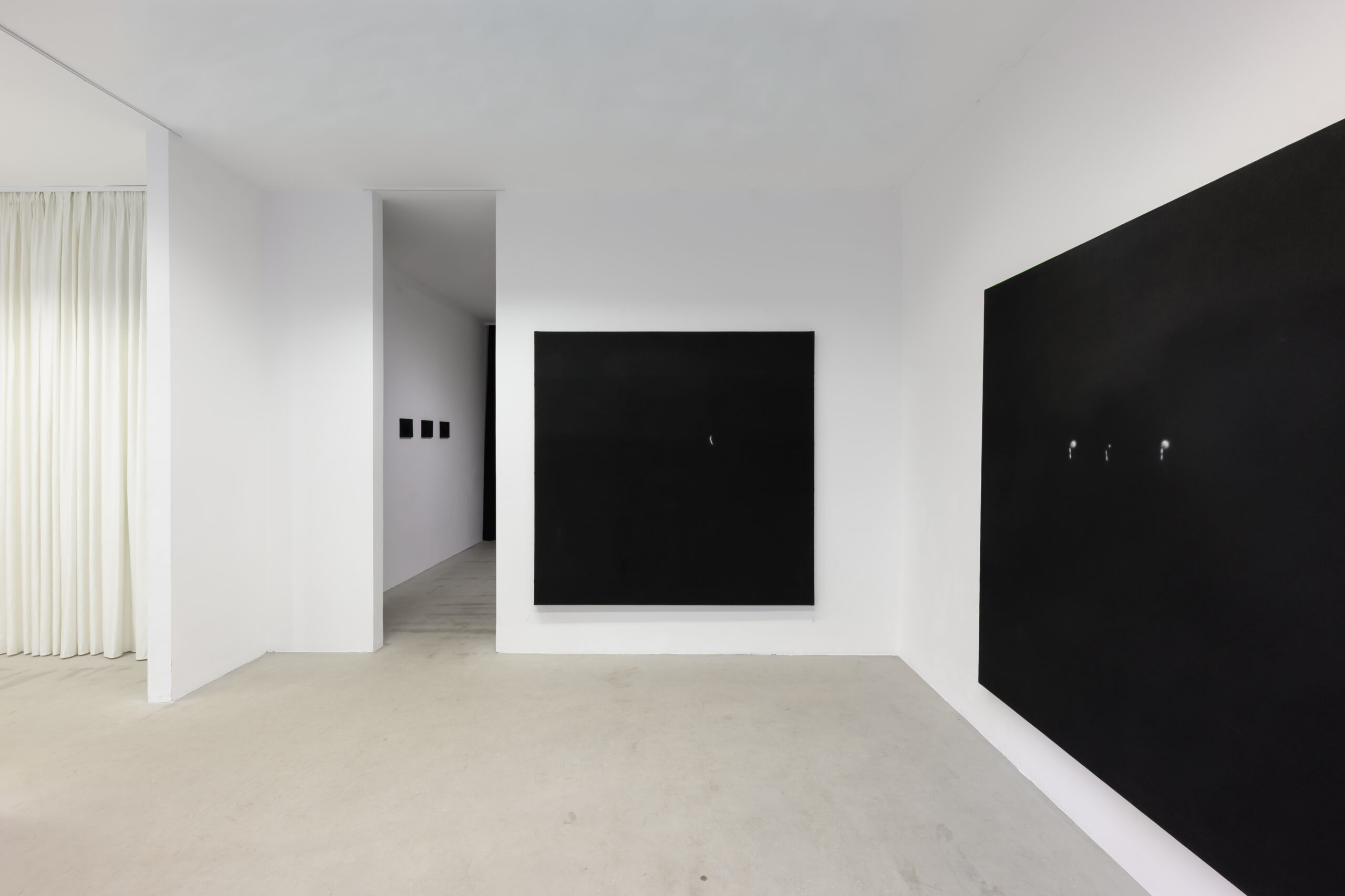
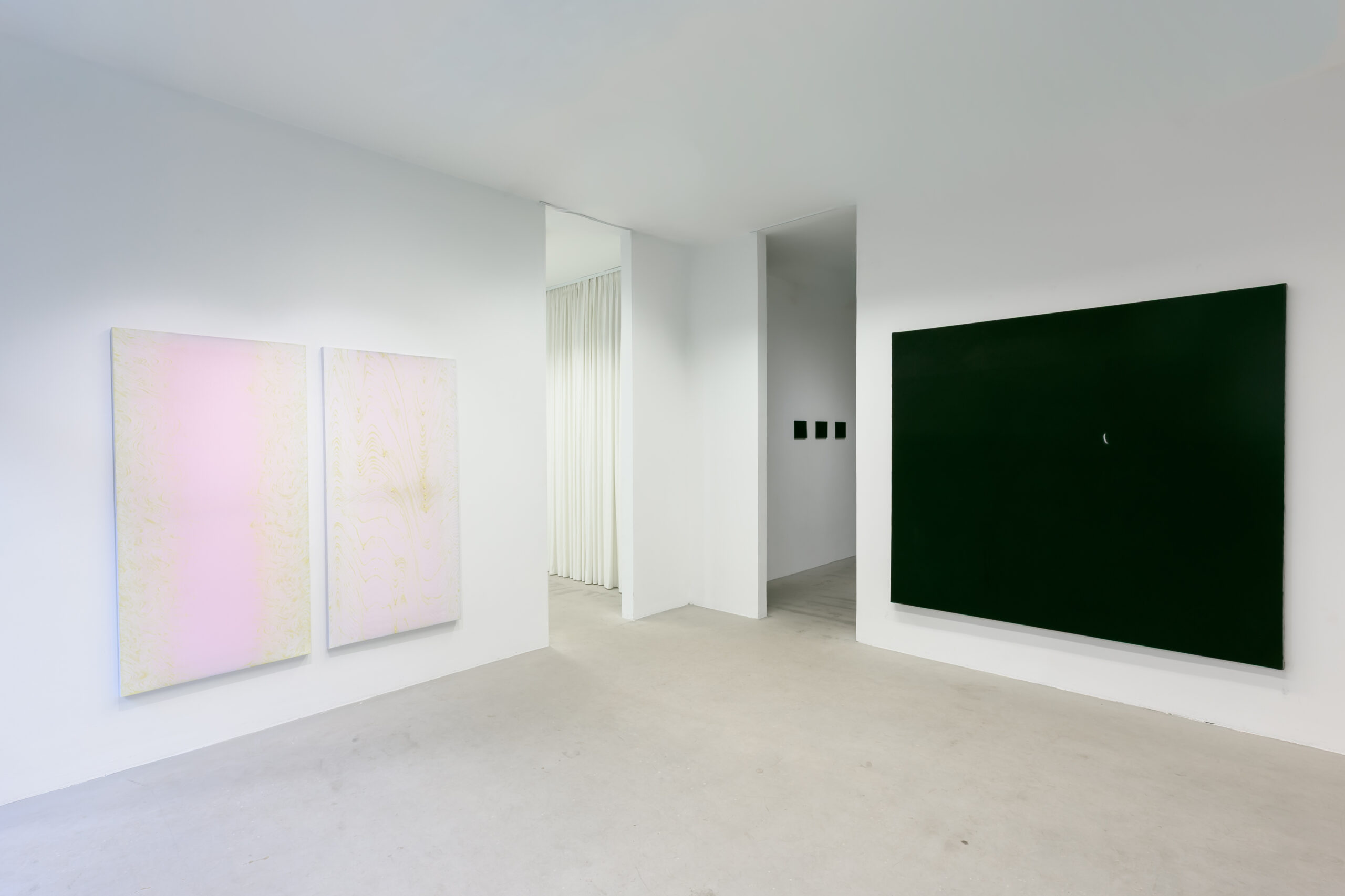
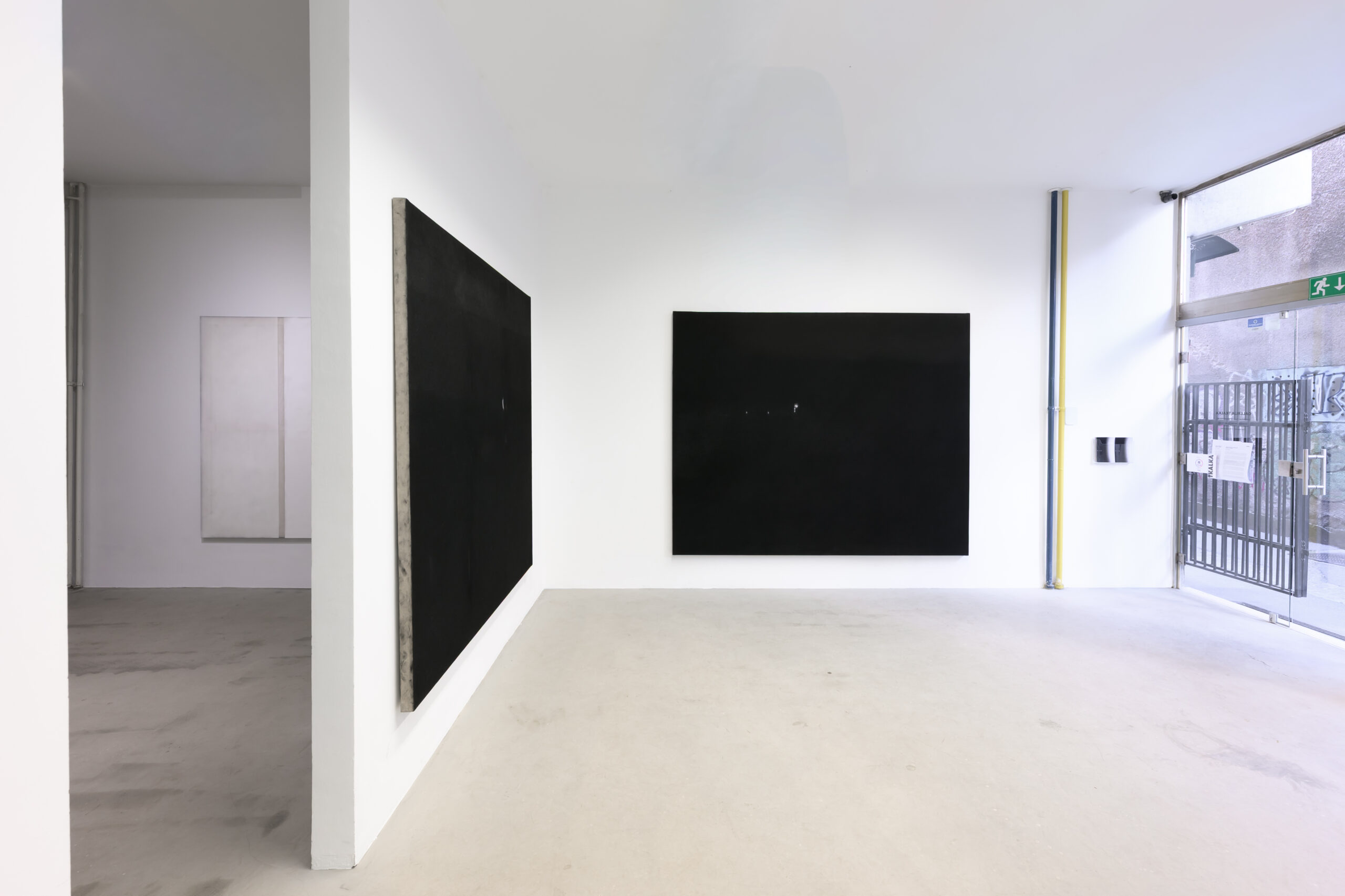
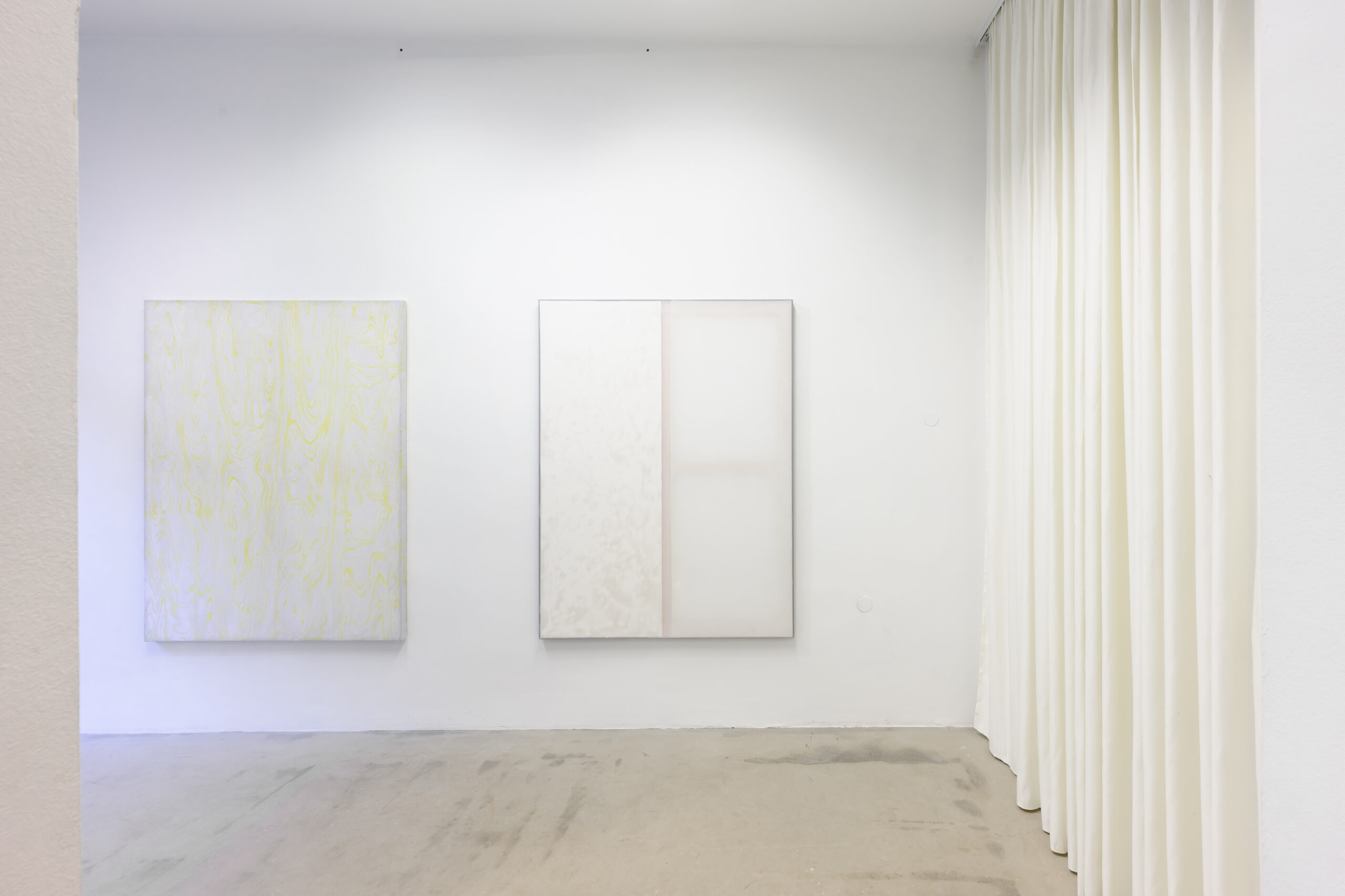
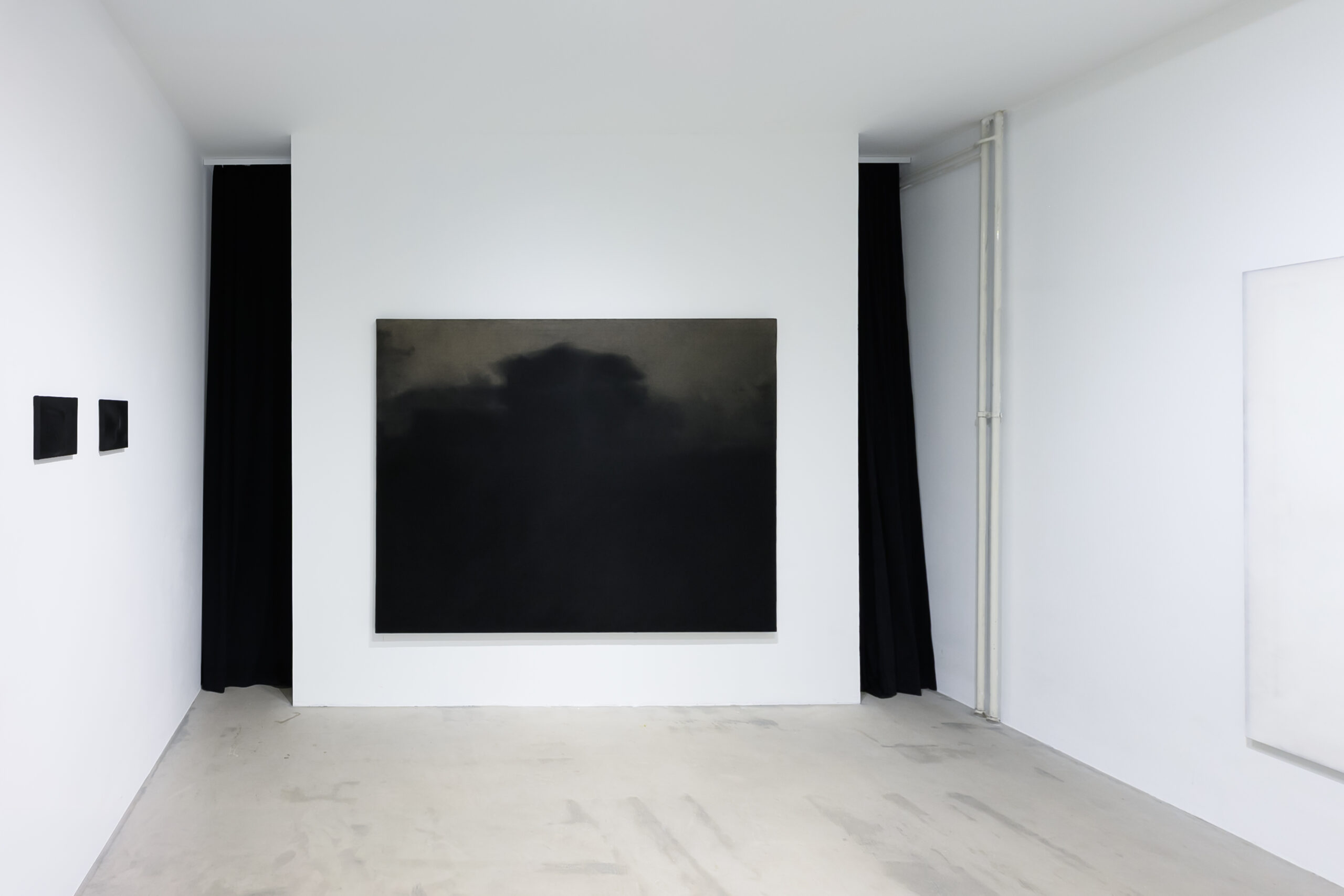
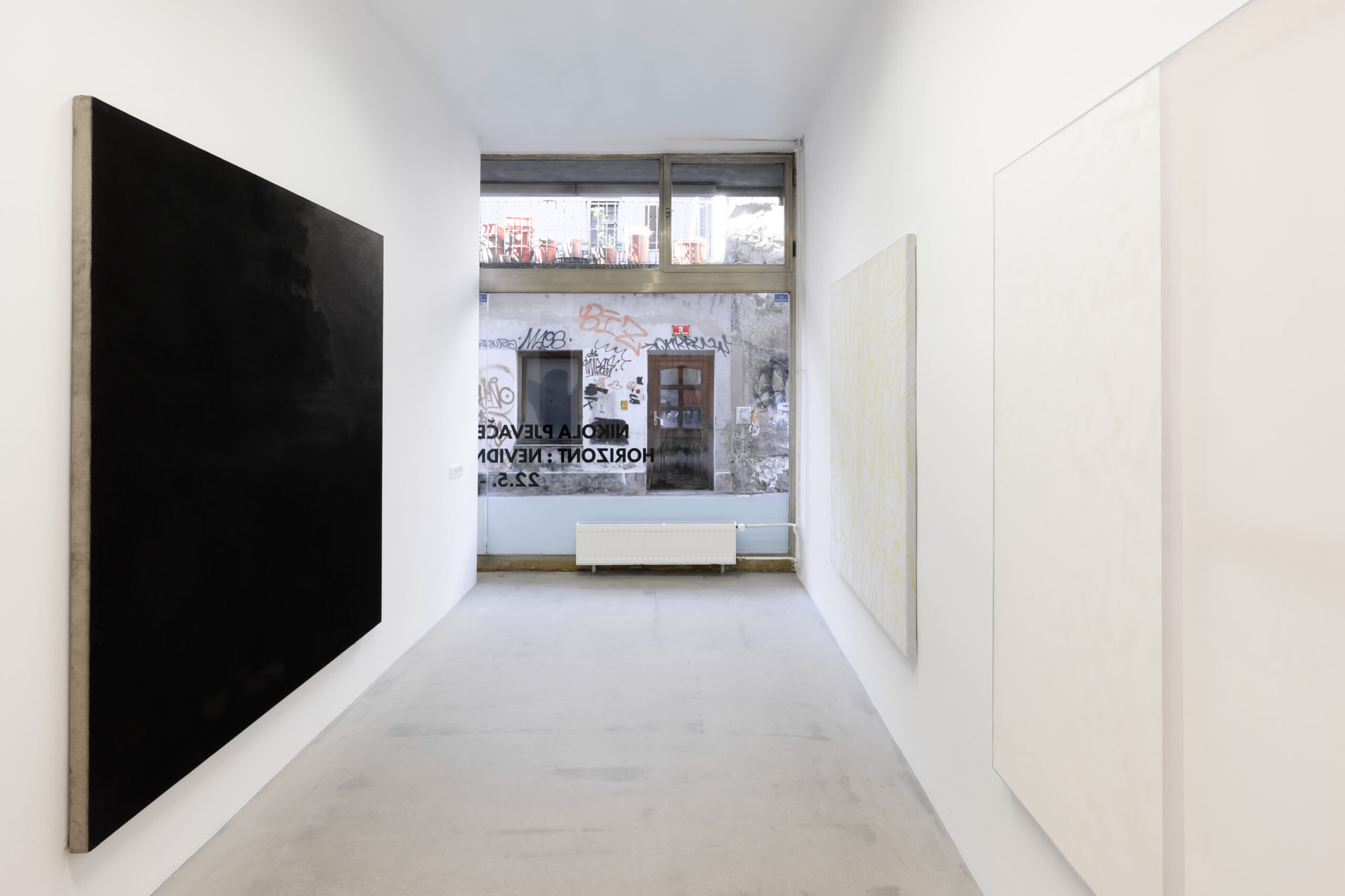
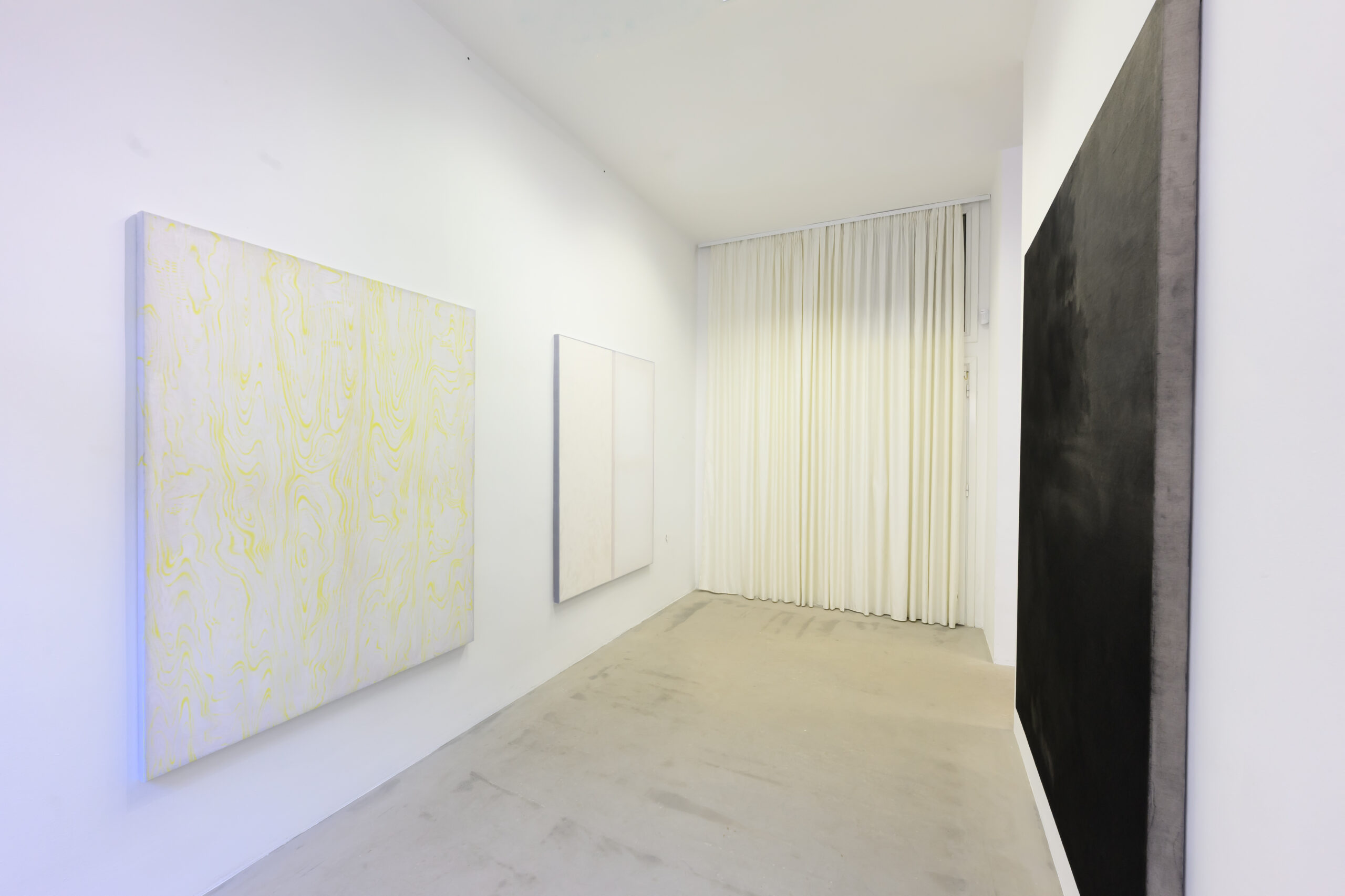
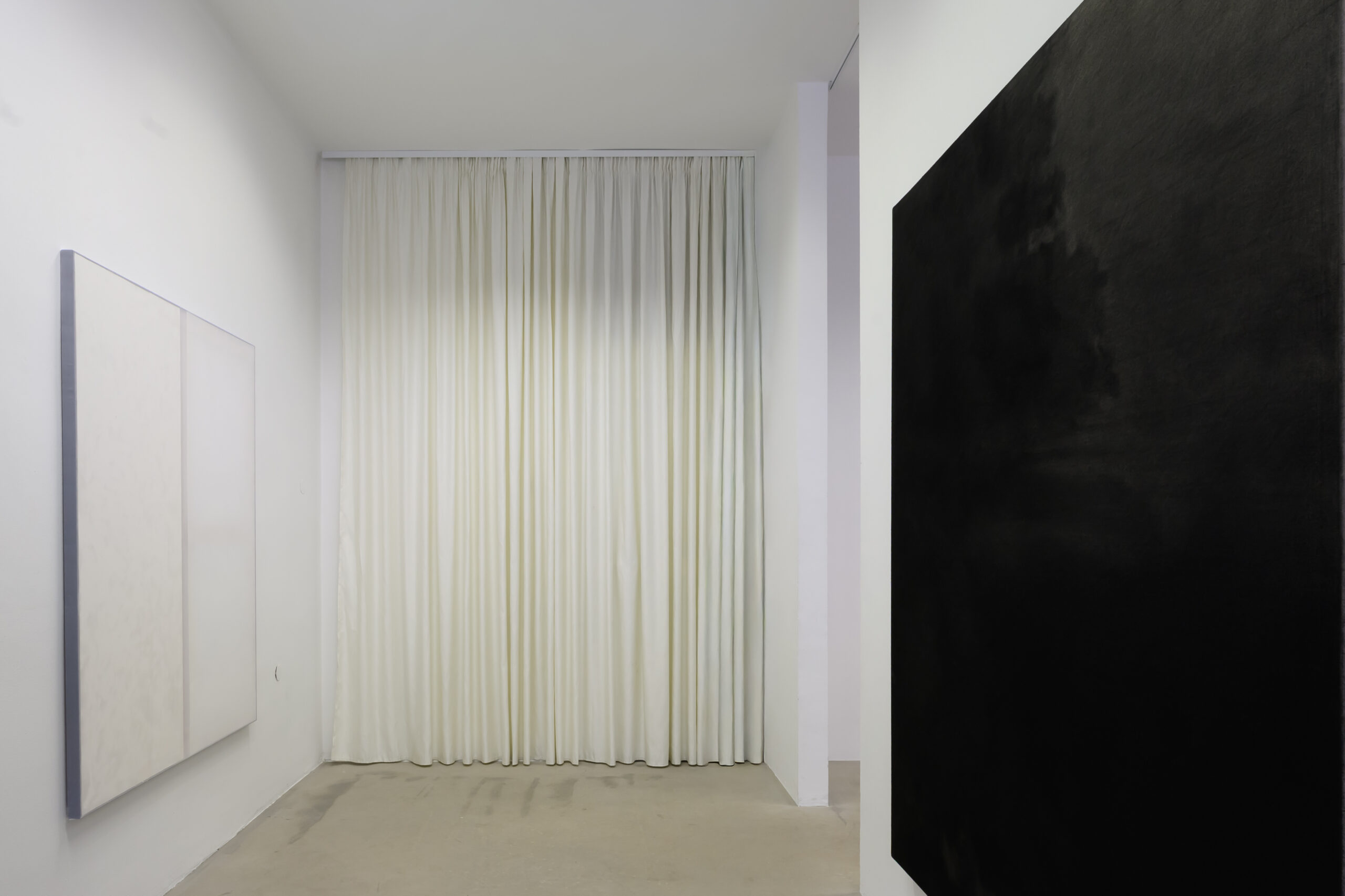
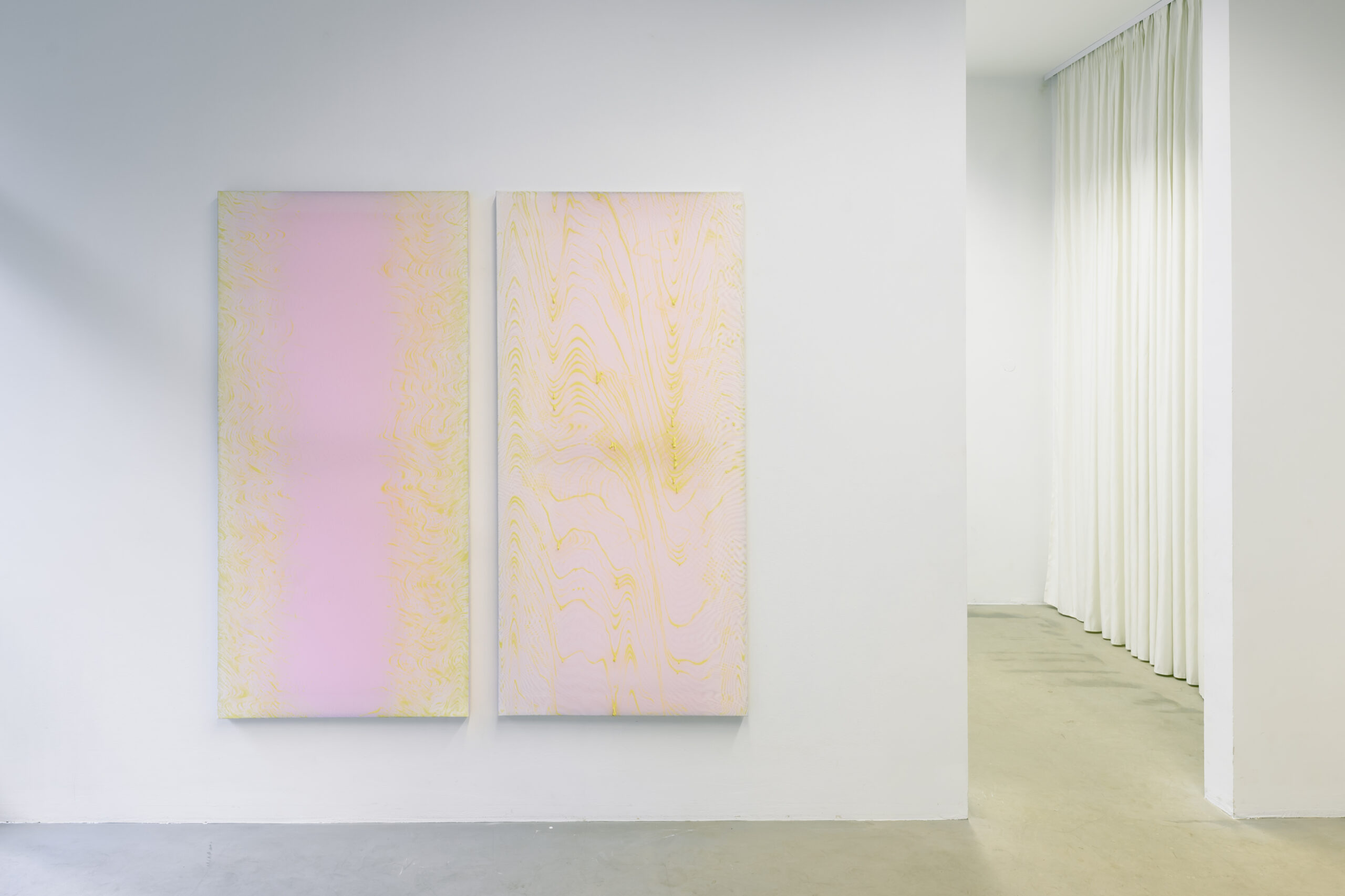
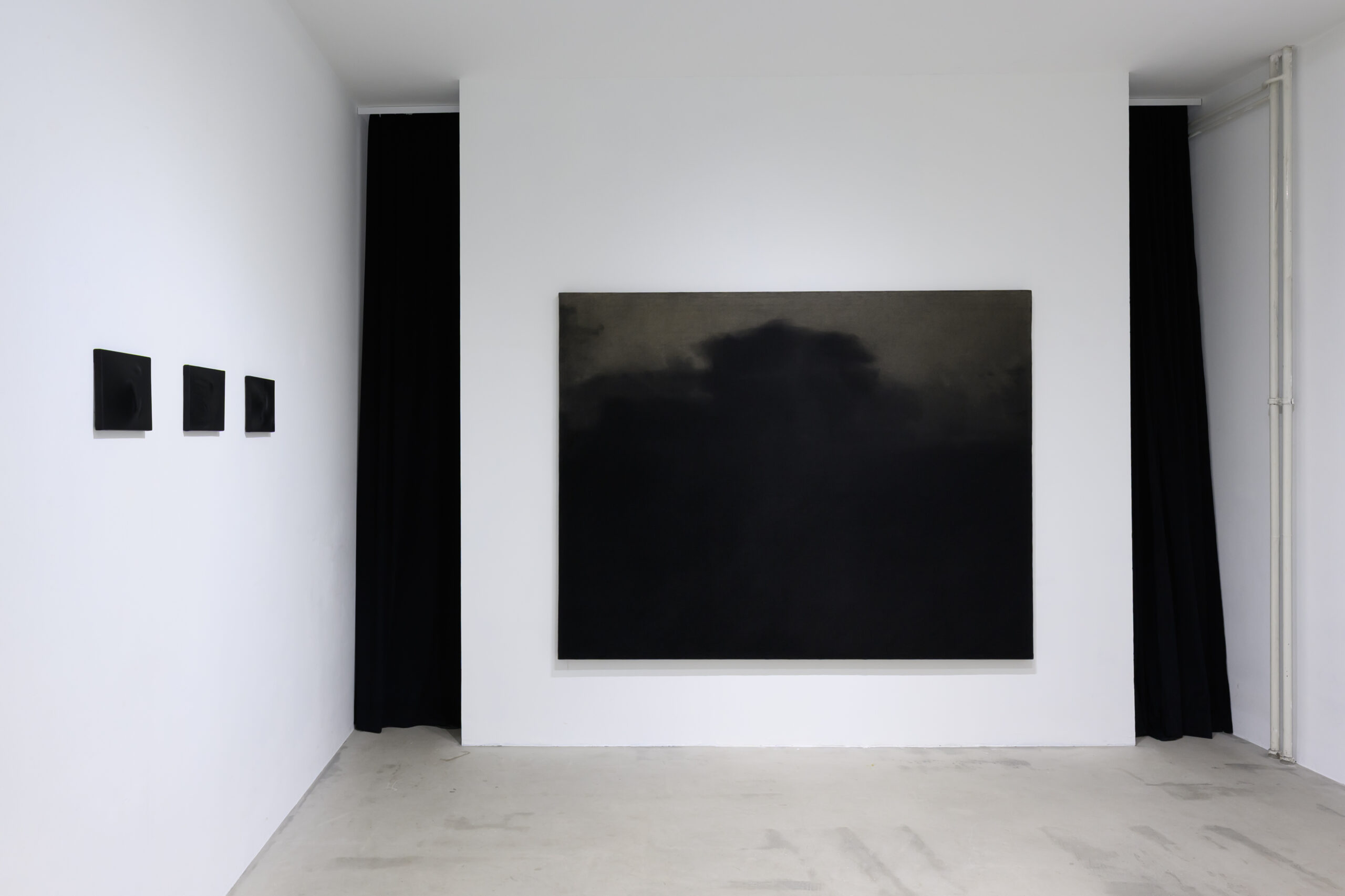
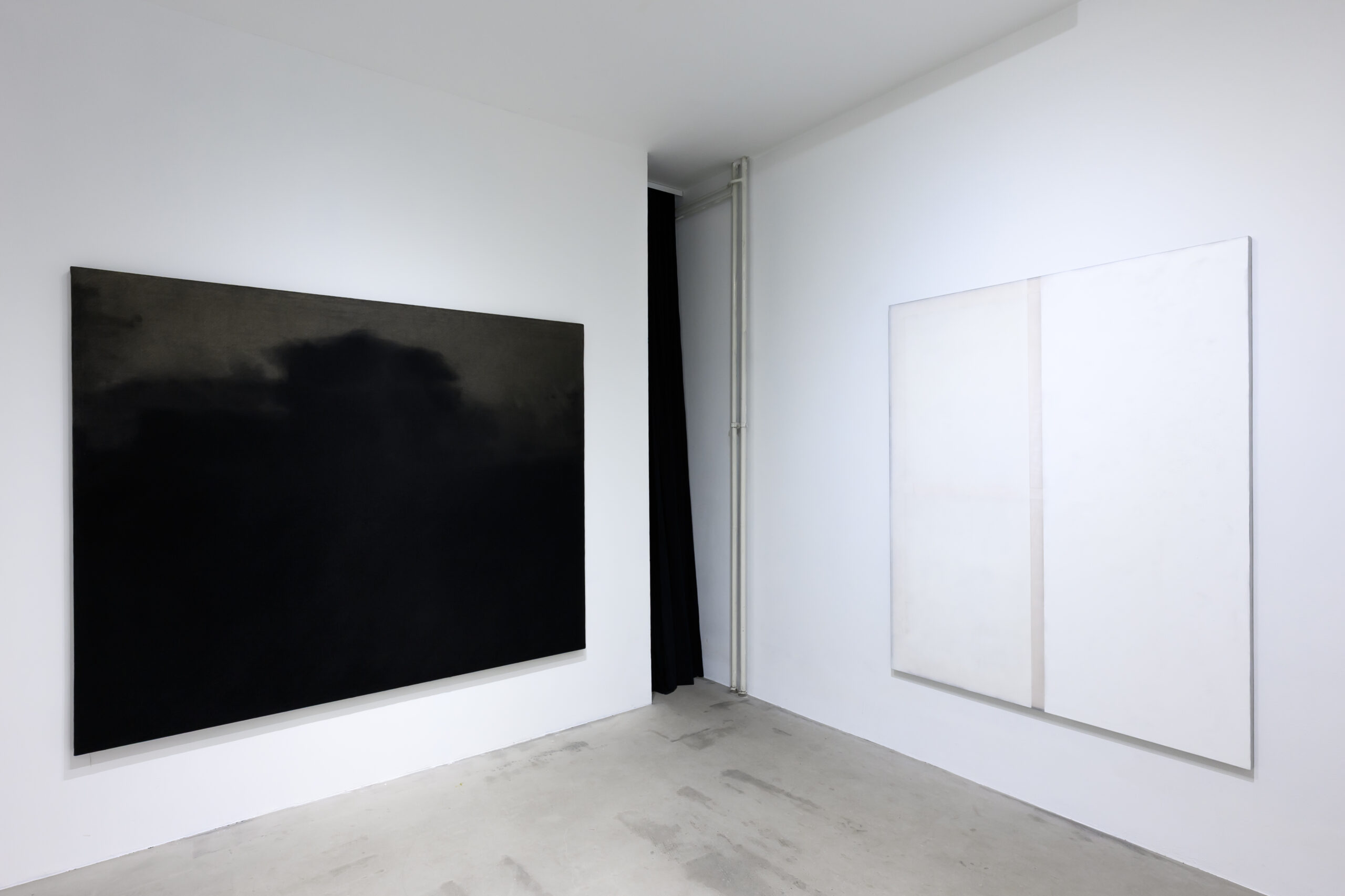
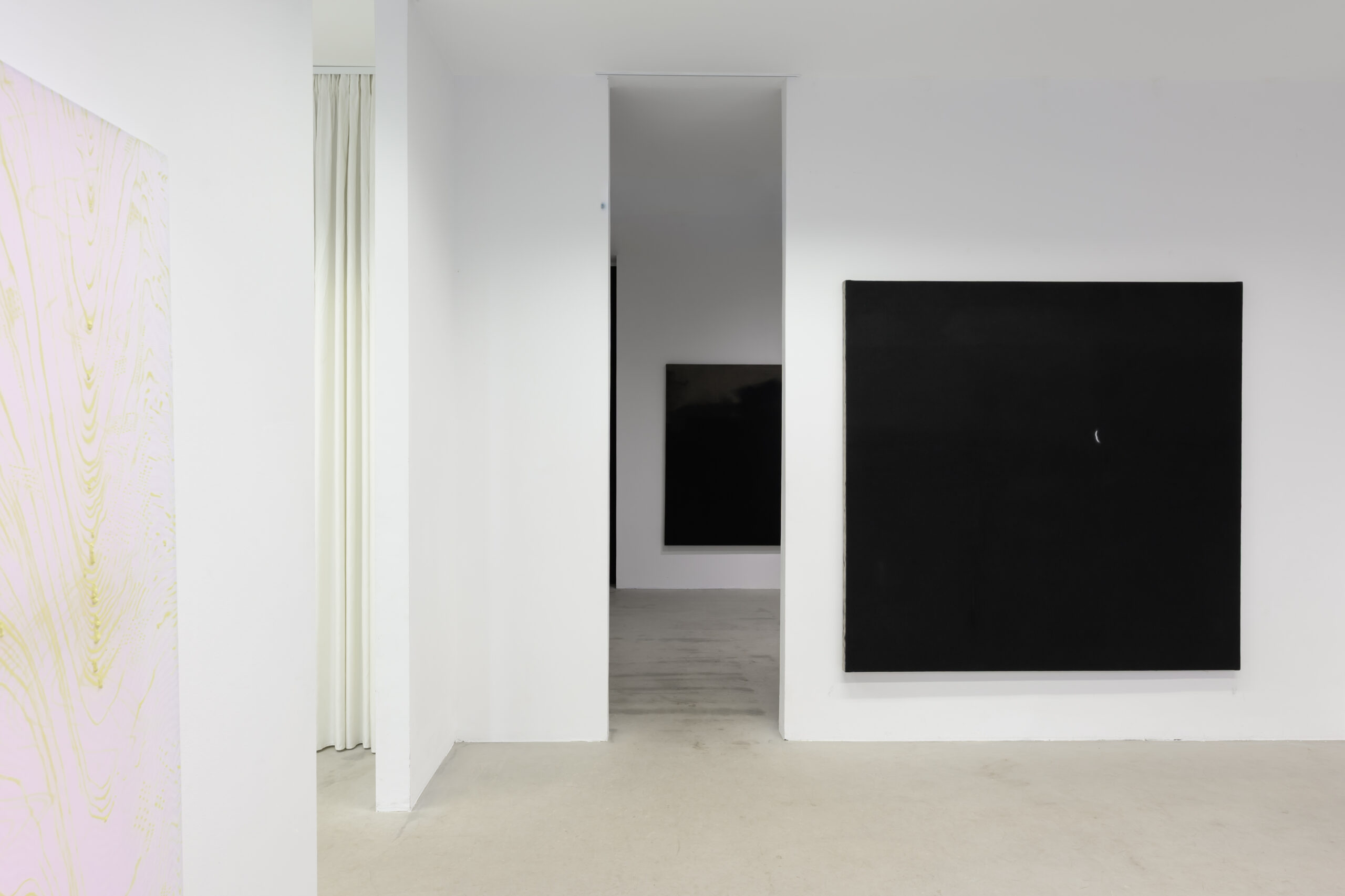
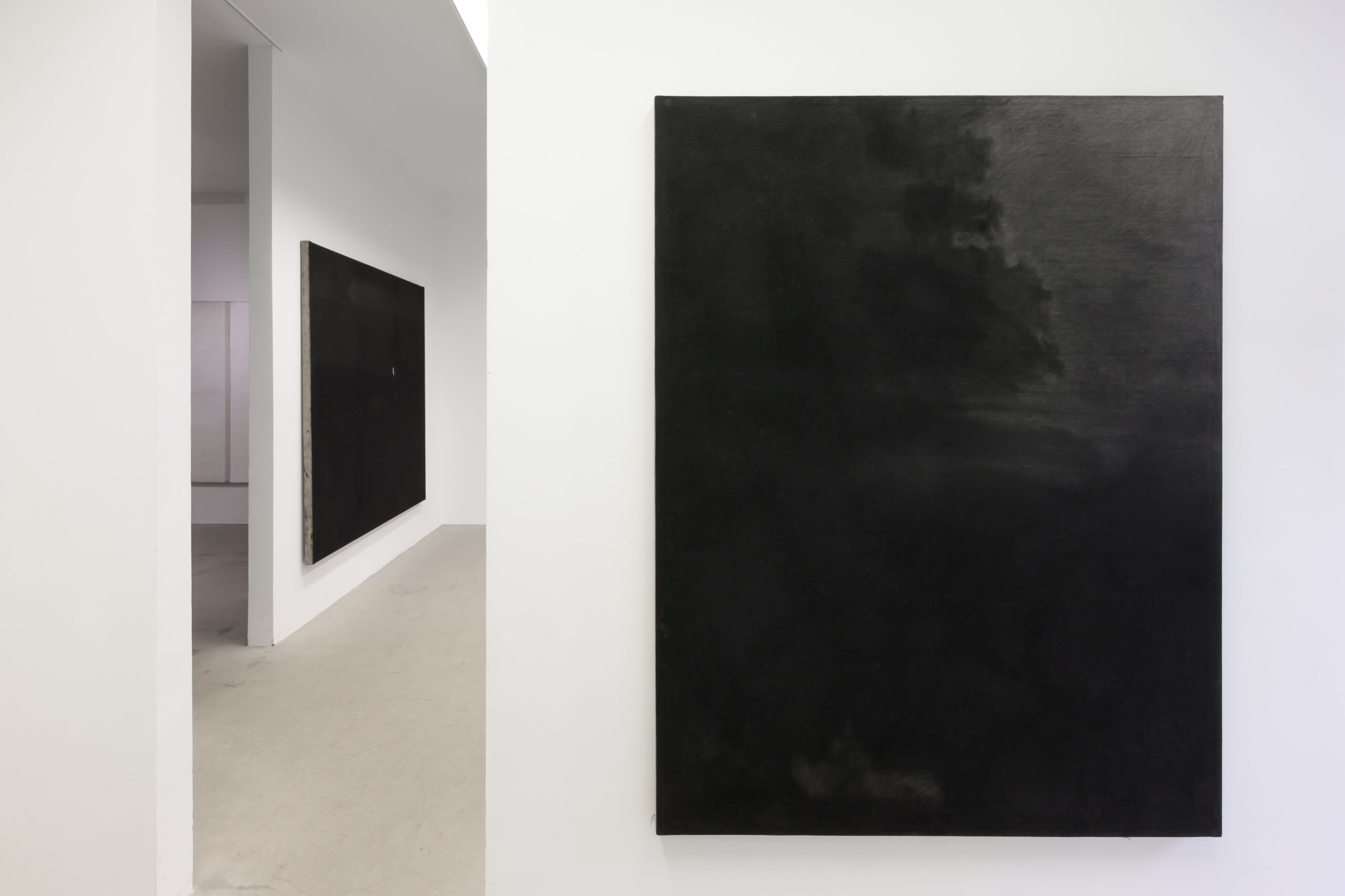
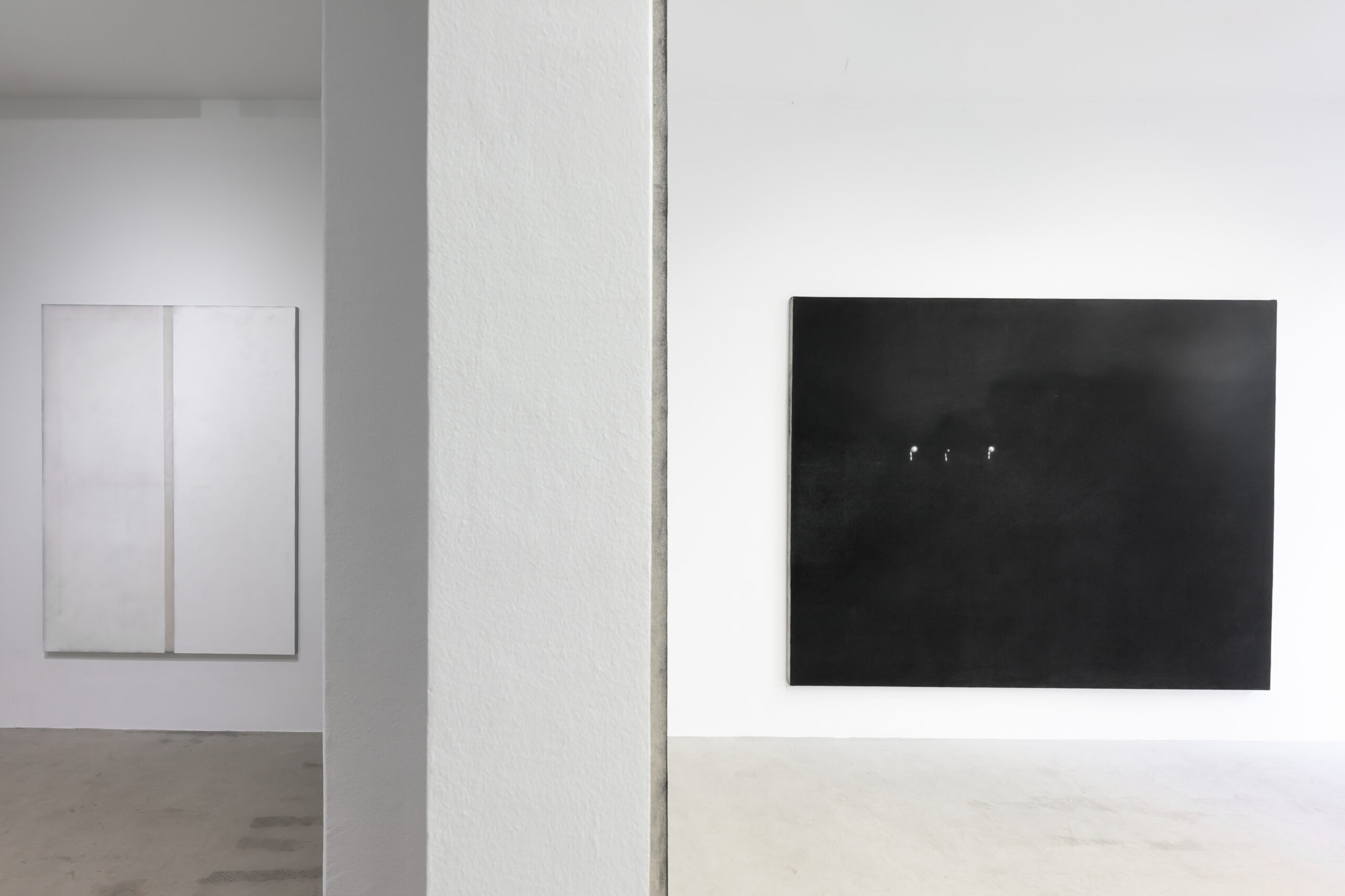
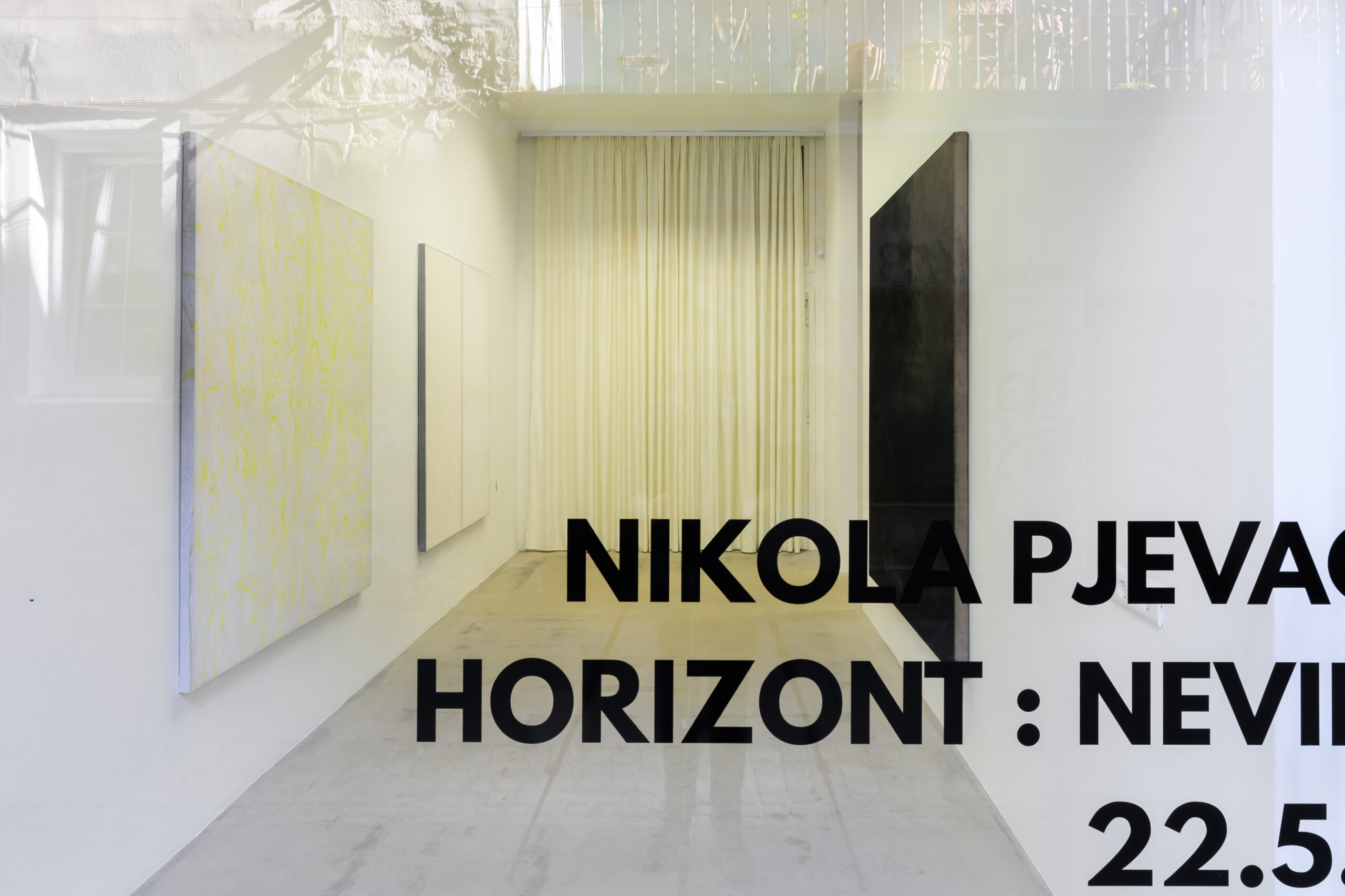
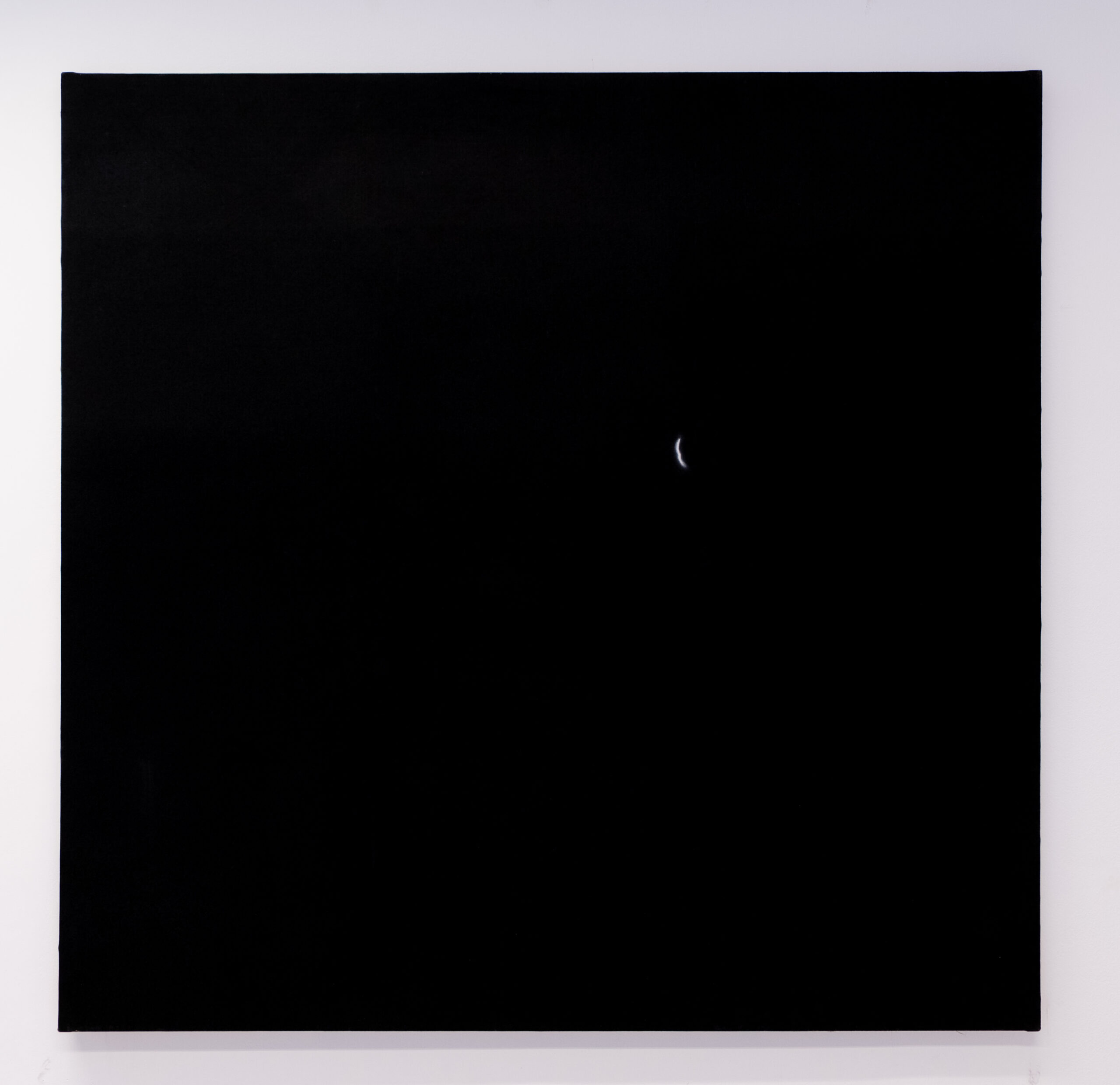
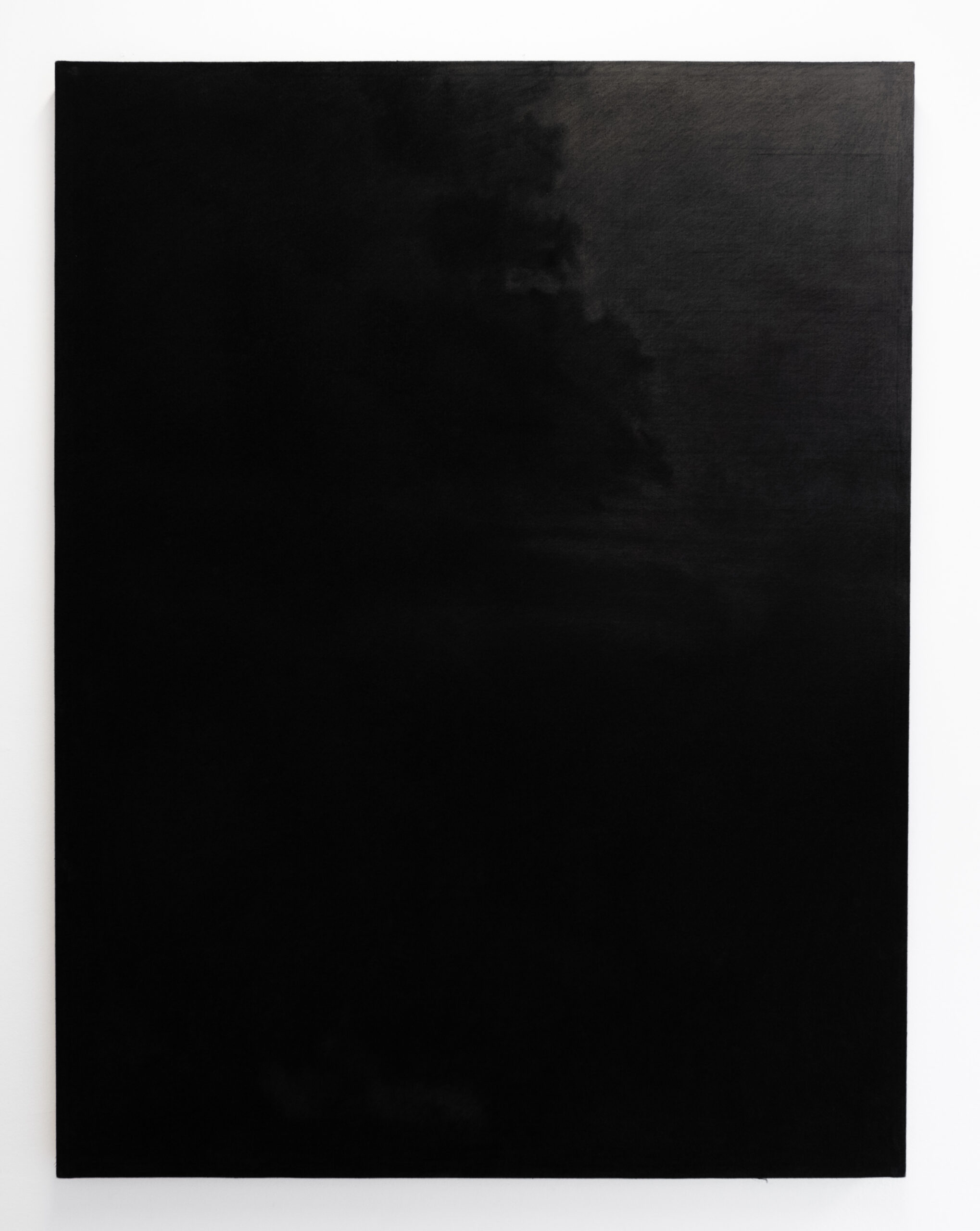
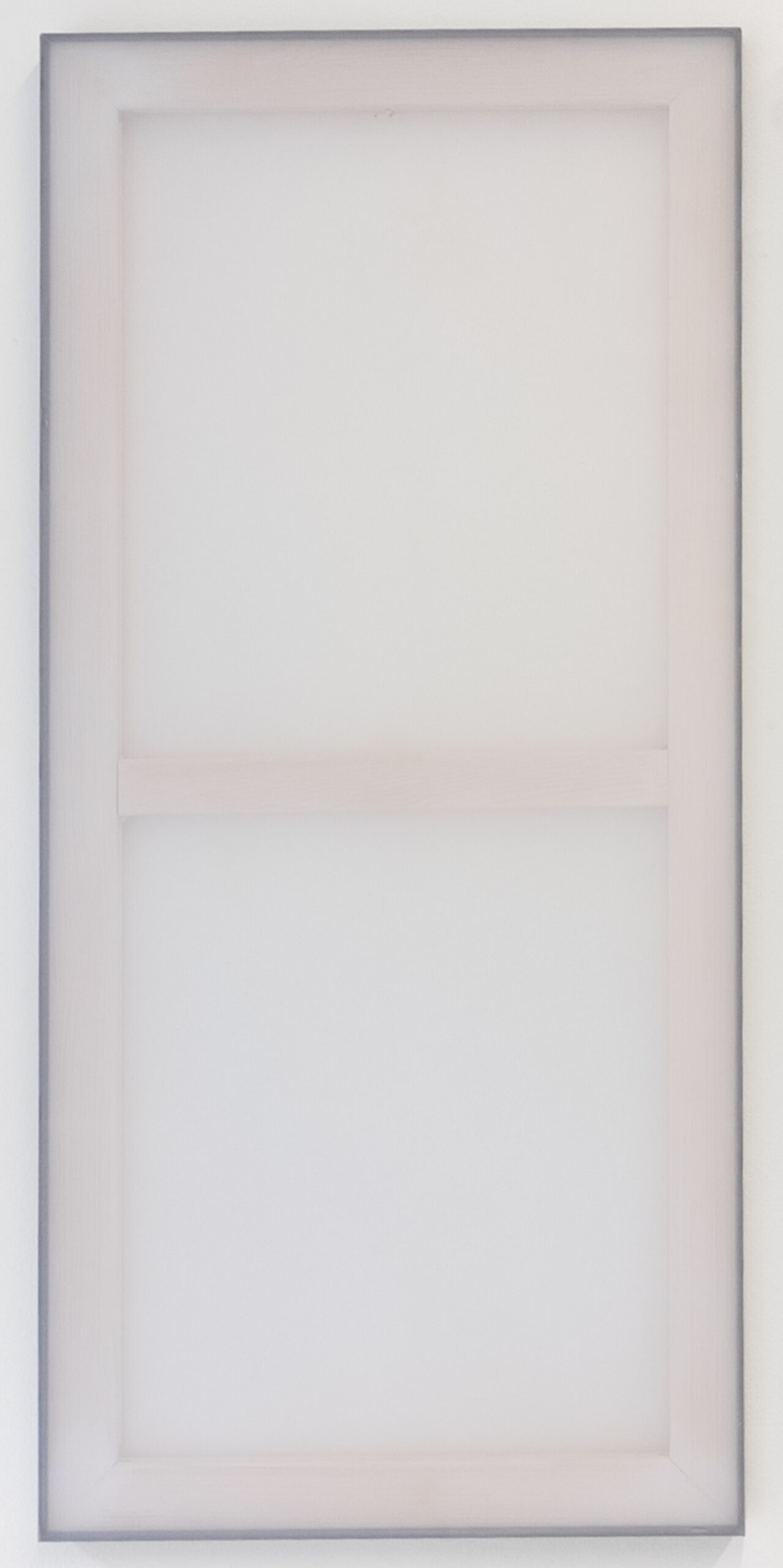
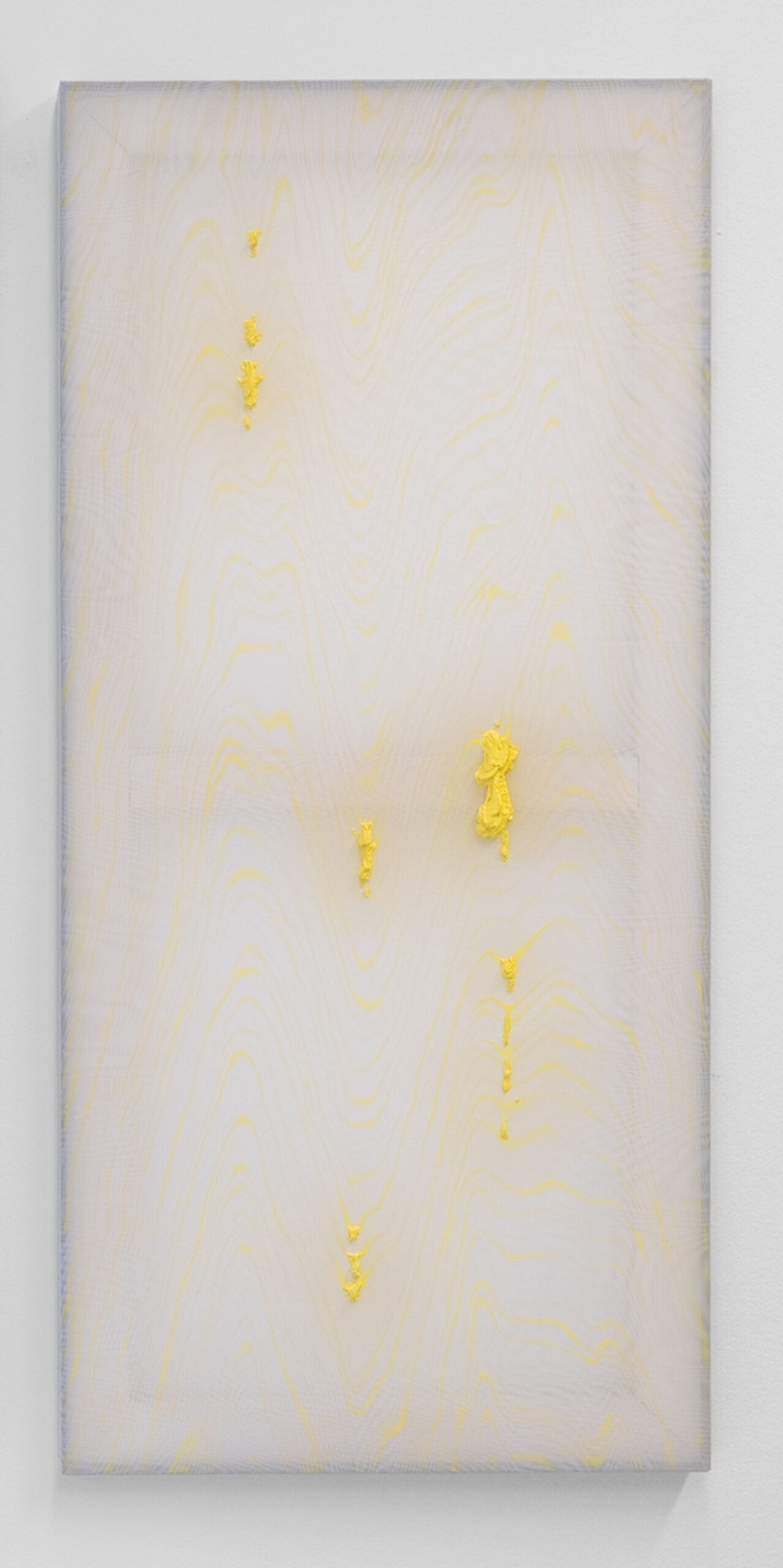
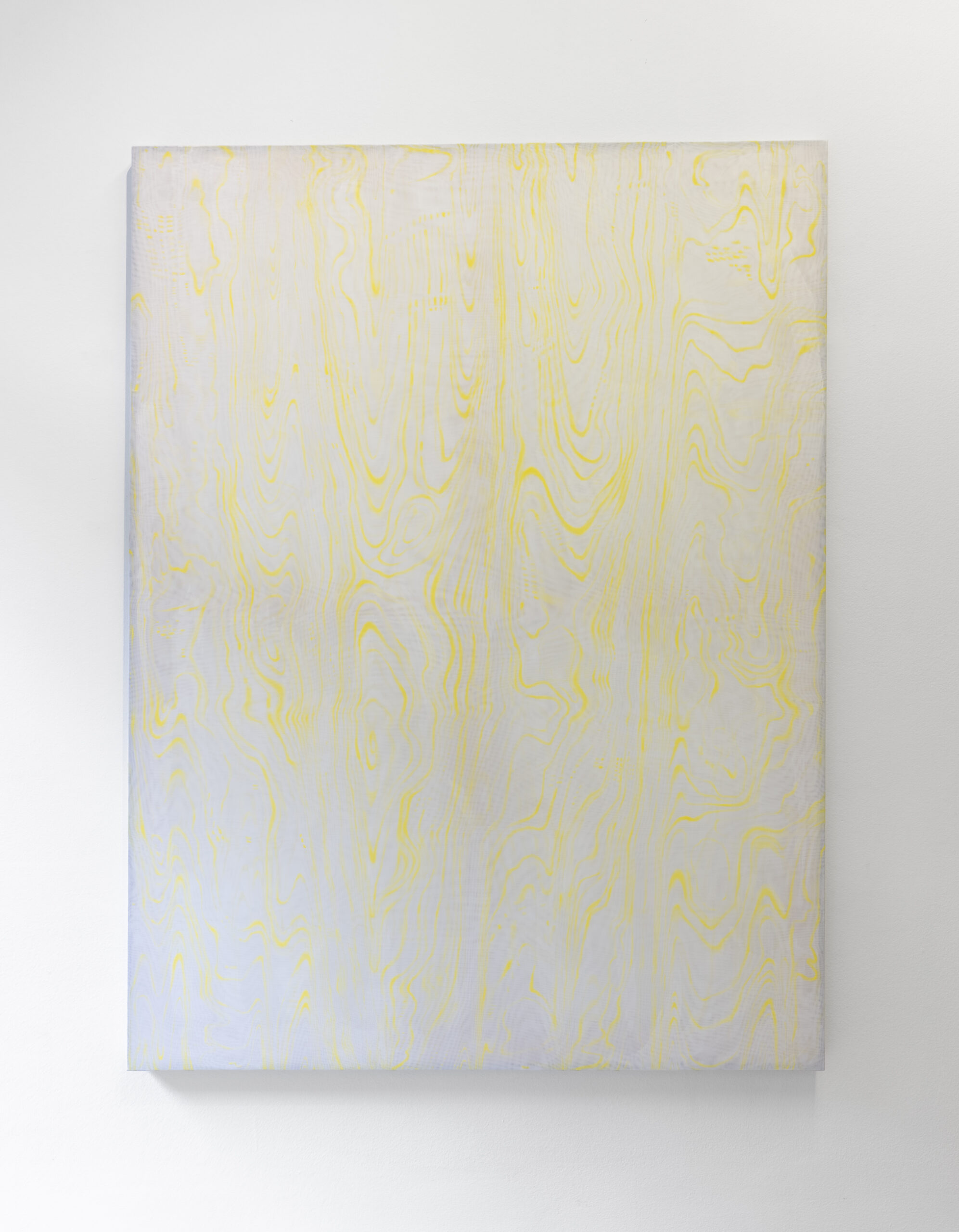
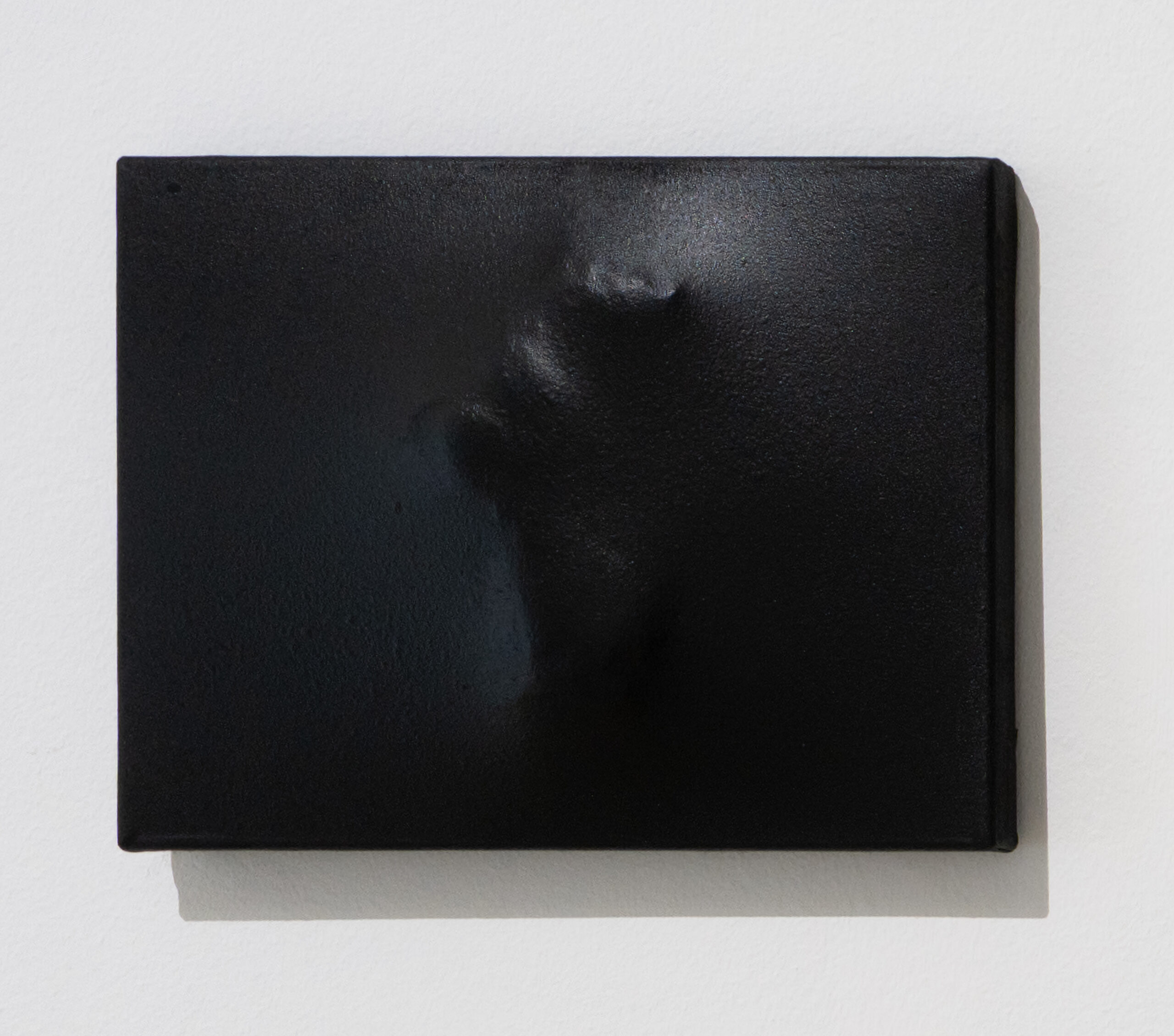
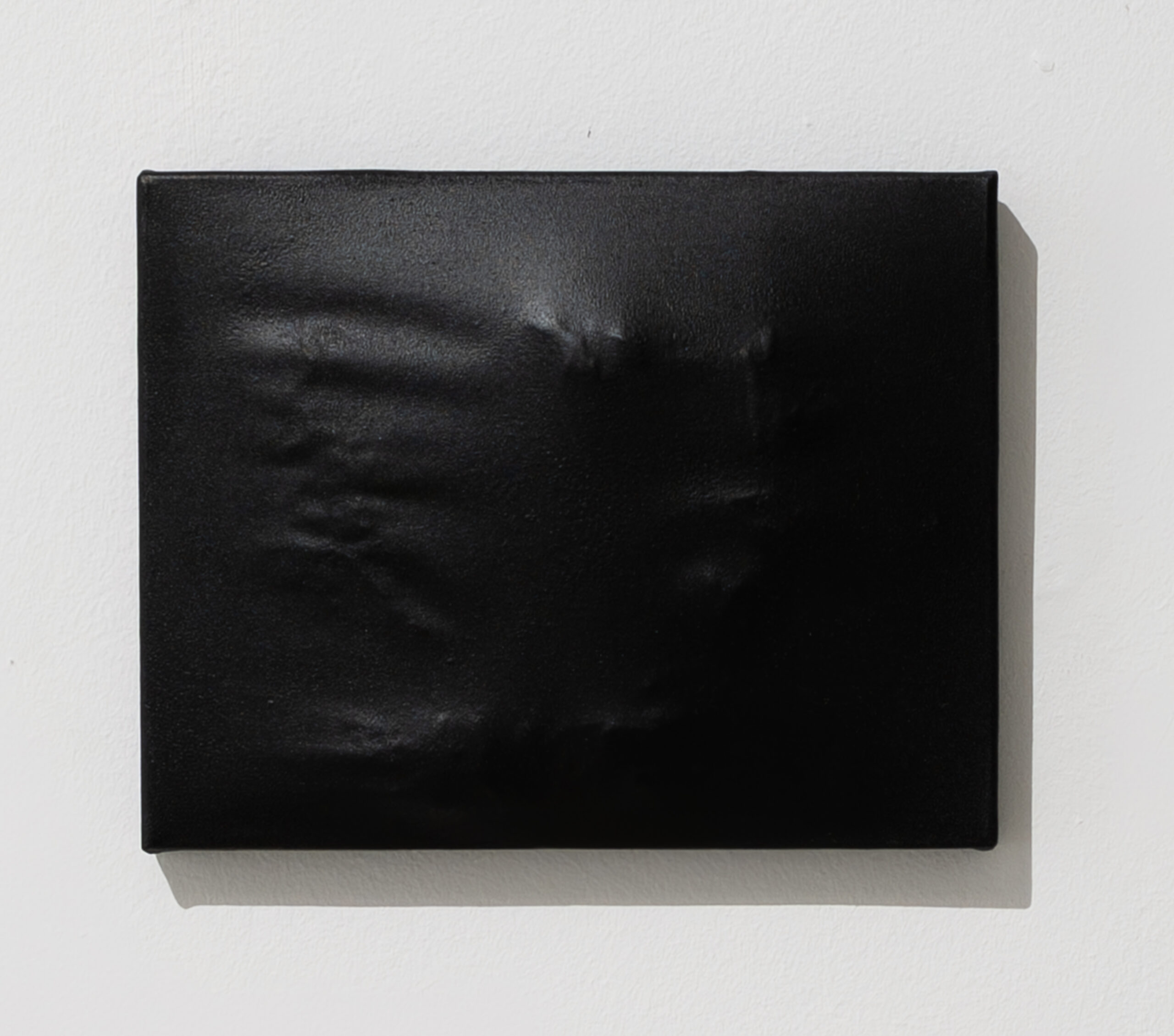
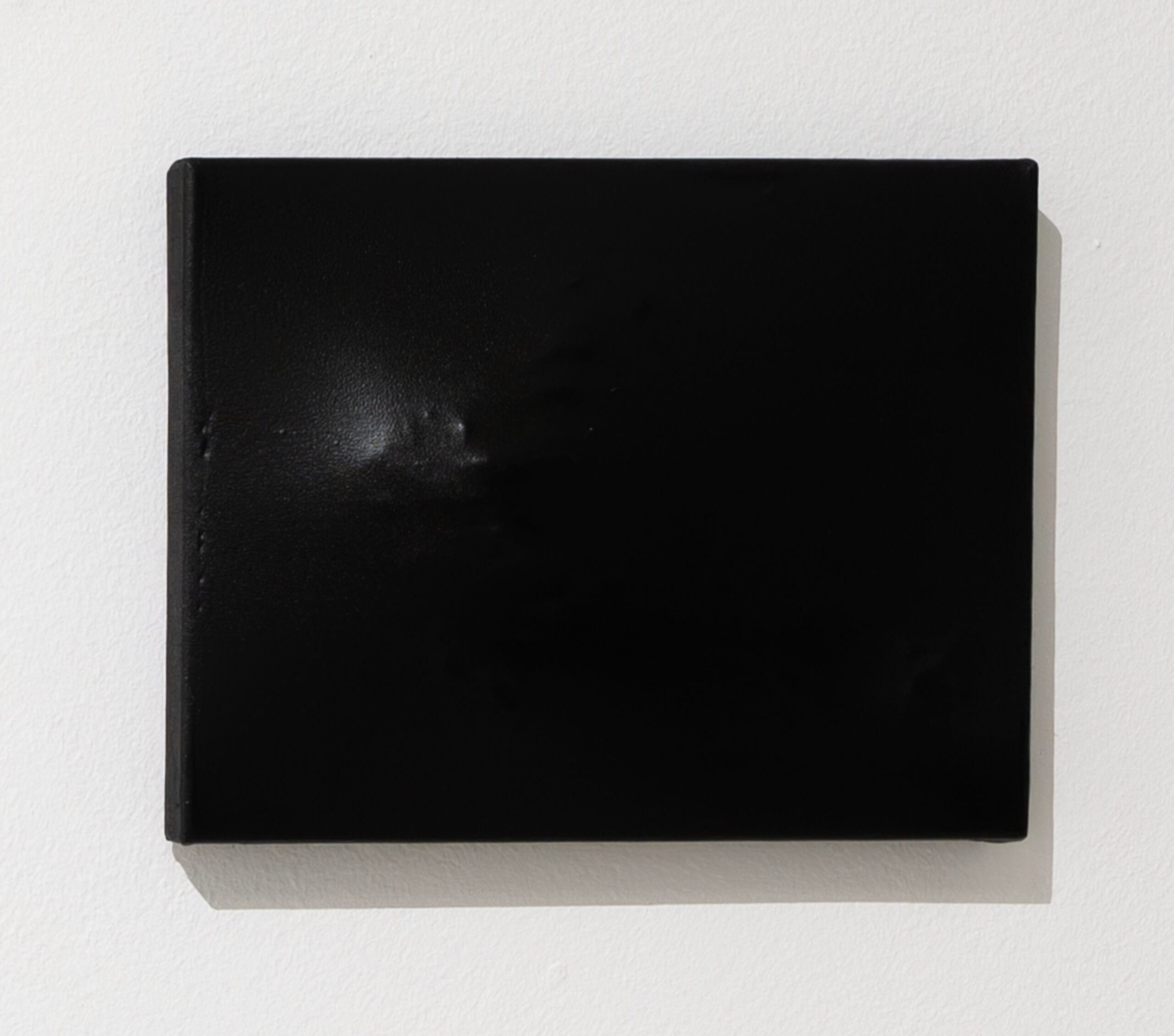
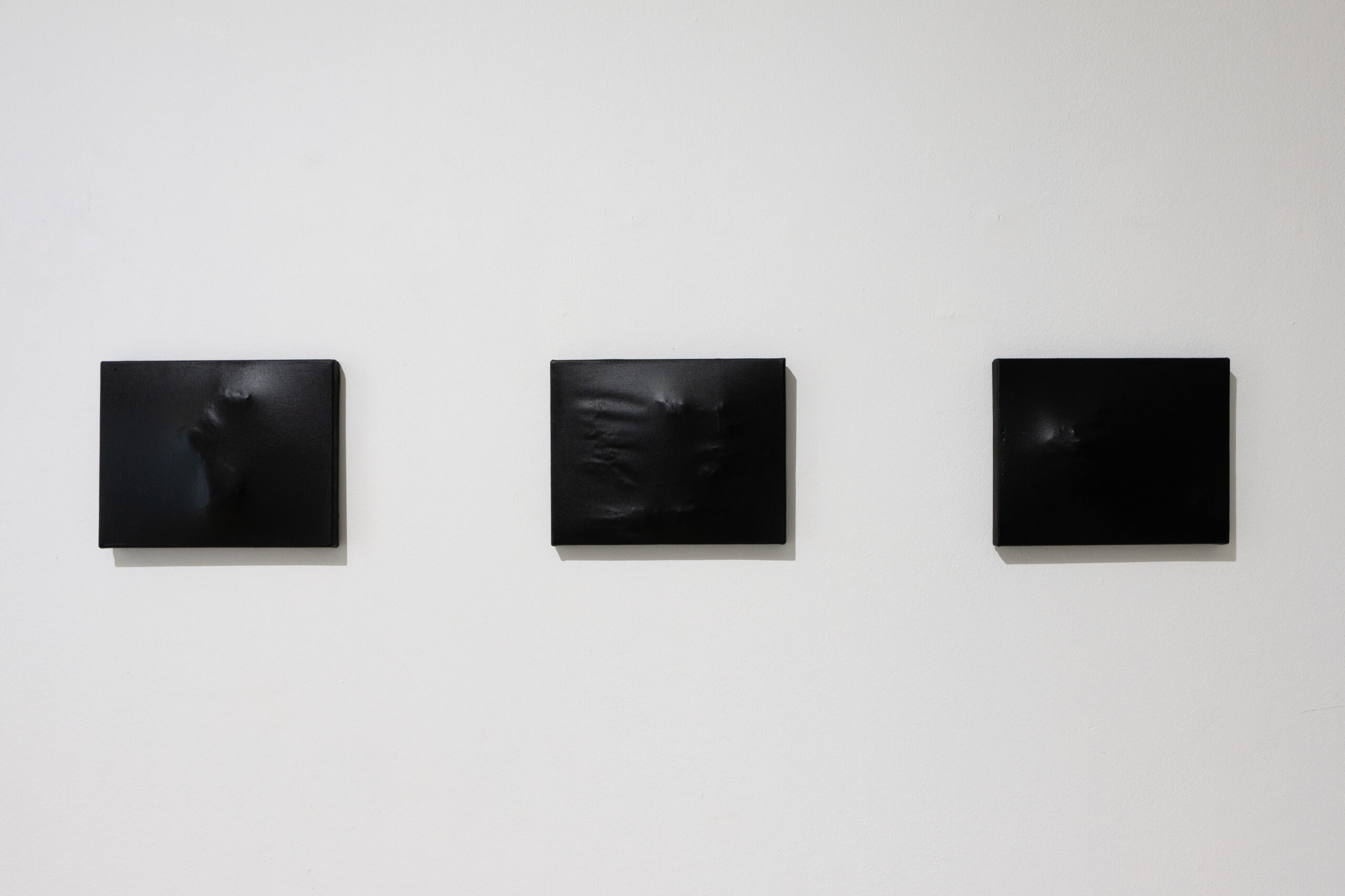
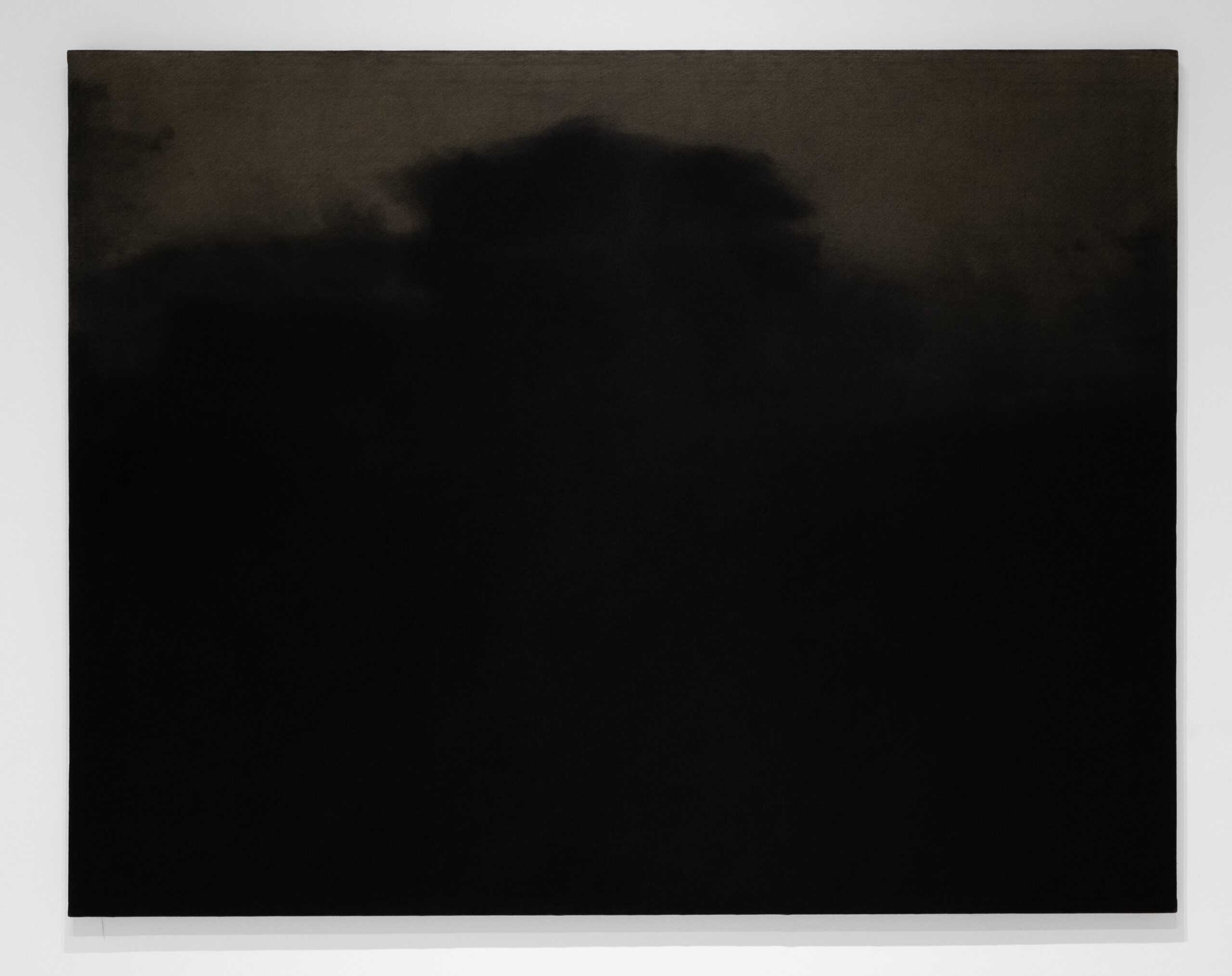
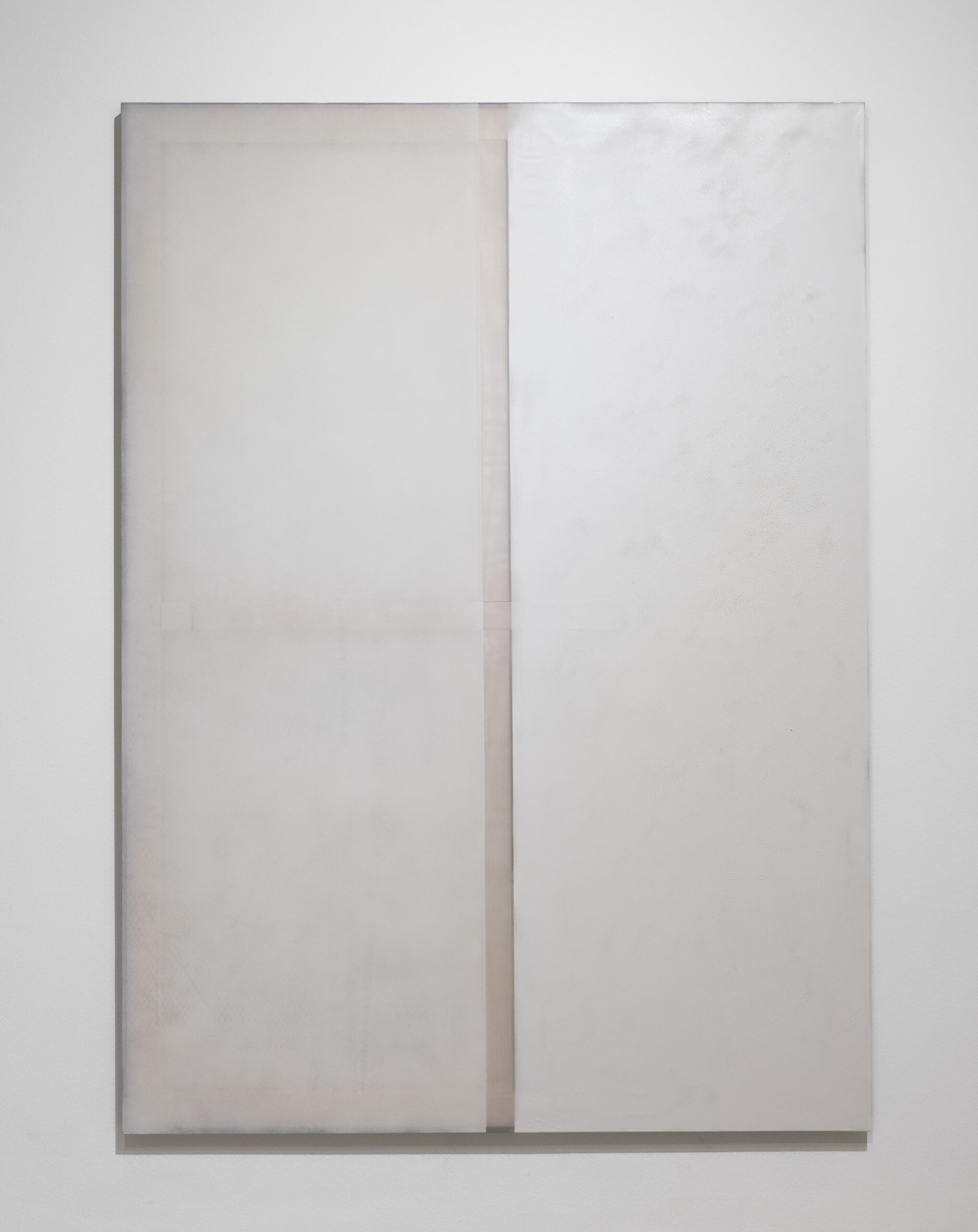
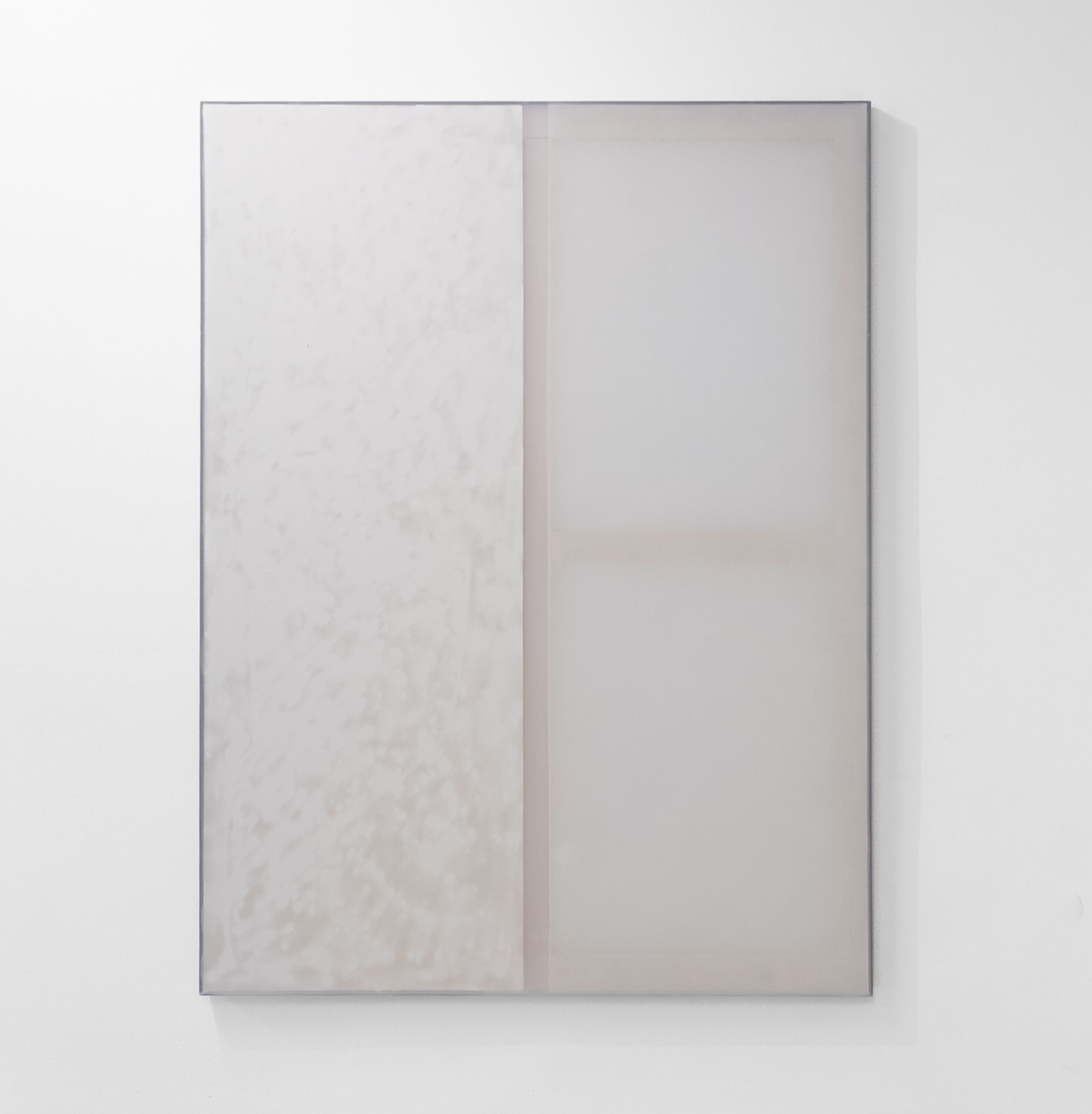
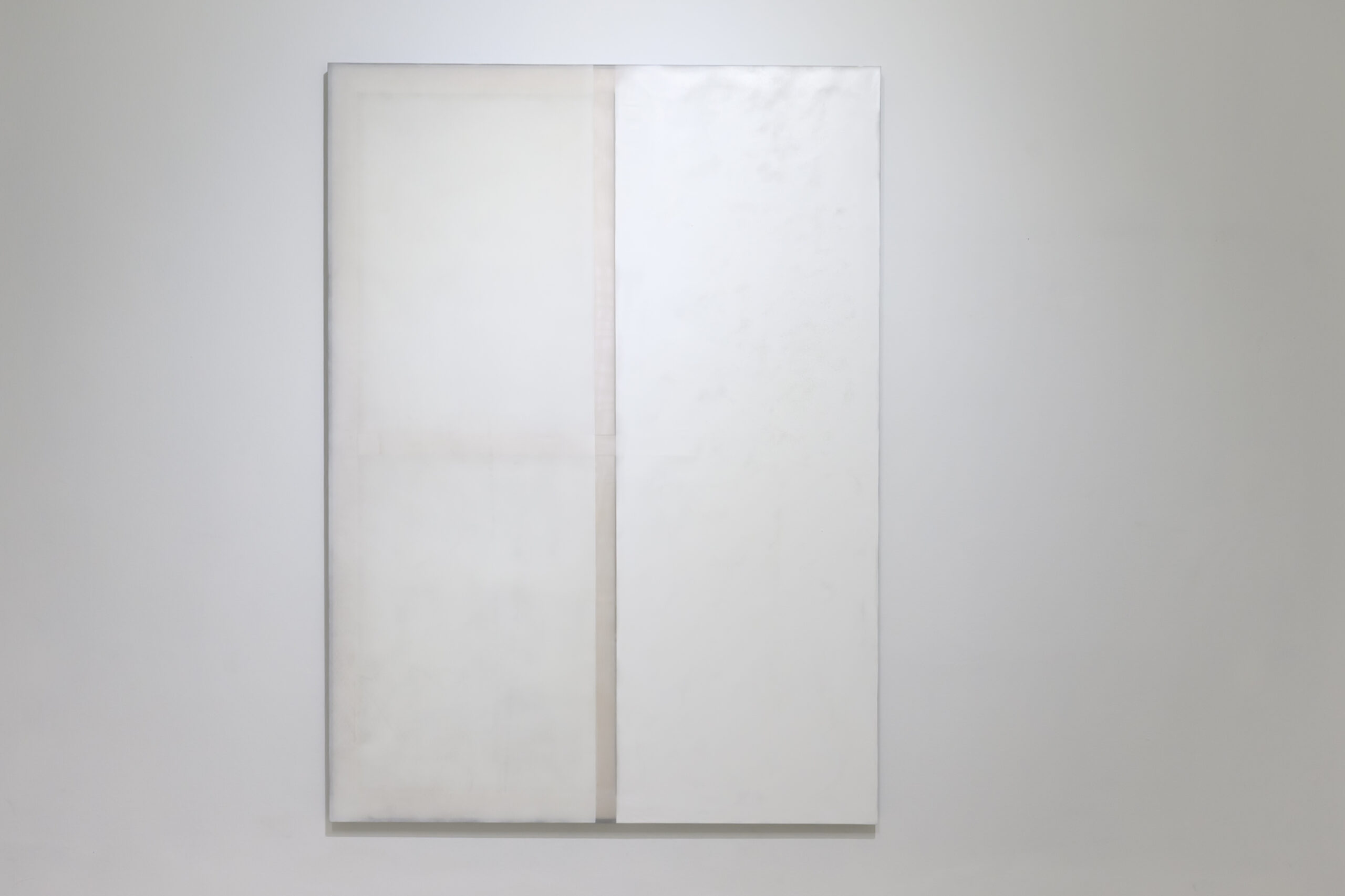
Set before us in this exhibition are the works by two artists which, in their idiosyncratic painterly expression seem to question – at least implicitly – the possibilities of painting as a contemporary artistic medium to convey sense and meaning that would in turn transcend the concepts of visibility and perceivability. Since the spectacles of our daily life co-opted visuality into a wholly new type of integral reality, painting is seen everywhere as a practice that lost its voice. Now the task of artistic expression in the provenance of the (habitual) end of painting becomes the search for alternative languages – or voices – that bring forth a new type of almost post-visual presence in the (painterly) works of new generations. No matter the medium – from meticulously crafted sombre landscapes presented in this exhibition to woodcuts presented not as prints but as sculptural surfaces – Pjevačević’s works reveal implicit aestheticism as a dark shadow looming over our daily existence, and thus can be rendered as highly critical yet also alienated works of clear post-conceptual provenance. No matter the medium, or the expression he adopts, Pjevačević has an interest for the fringe states of experience, for the moments in which light seems to only start playing with our ability to see clearly, to imagine or even hallucinate a scene or an atmosphere. Through his work, or rather just behind it – on the horizon of the virtual – we can see a faint reflection of a photograph, more literally, a drawing made with light itself. Thus inevitably, these works – though crafted through a highly processual and self-concerned artistic practice – come into dialogue with many of our contemporary concerns, from technicity to virtuality and beyond. While the gloomy (technical) reality shines behind the canvas of Pjevačević’s works, its abstract infra-structures become strikingly visible on the very surface of Katarina Snoj’s paintings. They demonstrate, quite blatantly, how the frameworks constitute also the windows to the world (of the picture) and vice versa, to the picture (of the world), and thus compresses the entirety of experience of visual culture into one uncanny situation. Abundant light in Snoj’s aesthetic register as well as the suggestive synthetic materiality of her work offer a striking contrast to Pjevačević’s work. Moreover, what one can see as a faint reflection in his work is in the case of Katarina Snoj pressed very close to the surface, just beyond the point of clear focus, as if behind a frosted glass. Between the two artists we see an interplay, the canvas disappearing and reappearing first as a screen, then as a matrix. The curators decision to bring these two artists – or better yet, their respective works – into dialogue tells us also something about their own understanding of our visual environments as they identified within it the need to problematize our contemporary worldview from the standpoint of artistic practice. This practice, as we have already hinted, positions itself at the fringes of pictorial representation by demonstrating in a certain sense the ability of a painting to act as an ambiguous medium, with a layered transparency, without depth, as an opening, and as a display with an accentuated sense of materiality. This implicit aestheticism of the dark, meticulously crafted sombre landscape, as a transparent look into the ‘picture without the world’ – because the representation we sense in the work come from within an already technically or spectacularly abstracted world – become present to the viewer no longer as paintings but moreover, as elements of space or at least as something much more and at the same time much less than a painting, or a window. Clearly obscured subject matter of Pjevačević’s paintings create an aesthetic of ambiguity through which one can rightfully confuse the fragility of painting for virtuality of its subject, monochromatic register for introspective character, acting as a texture on its conceptually transparent surface. On the other hand, Katarina Snoj presents us with a complementary situation, a blurred vision of our own world from the standpoint of the ‘world within the painting’. Ambiguously opaque, her works don’t want to immerse us into the infrastructural character of the painting itself but rather to reconsider our world as a visual construct, or rather as visually constrained within a singular world-picture. In the end, these works demonstrate that even though transparency comes to us as a sign on how to approach these works, the realities that we observe from each end of the painting are vastly different, depending also on the direction the painting is facing – maybe as a see-through mirror which requires of us to adjust our own situation first before being able to see beyond the surface or we might end up only seeing in it our own reflection.
Katarina Snoj (2002, Ljubljana) completed her undergraduate studies in painting at the Academy of Fine Arts and Design in Ljubljana and is currently pursuing her MA studies at HDK-Valand Academy in Gothenburg, Sweden. Alongside painting, she also works with installation, printmaking and photography. She has participated in numerous group exhibitions, including at Media Nox, DobraVaga and the Small Gallery of the Bank of Slovenia, at +MSUM במסגרת a workshop with Aleksandra Vajd, at the Slovene Ethnographic Museum, and with a solo exhibition at Gallery Odprto obrobje. She also publishes critical texts and collaborates on exhibition curatorial projects.
Nikola Pjevačević (1993, Beli Manastir) is a visual artist working in the fields of painting and drawing. He graduated from the Academy of Fine Arts in Zagreb in 2019 and currently lives and works between Zagreb and Osijek. He has exhibited in numerous Croatian galleries, including SC Gallery in Zagreb, Salon Galić in Split and Josip Račić Gallery. He has received several awards for his work, and his works are included in the collections of the Museum of Fine Arts in Osijek and Erste & Steiermärkische Bank.
Curated by Tina Gerlec and Miran Blažek
End of content